
The History Of Linux Mint
Linux Mint was originally created because founder
Clément Lefebvre wanted an operating system focused entirely on elegance and user comfort. The distribution evolved from a simple hobby blog into an independent operating system ecosystem.
1. The Foundations & Rapid Growth (2006–2010)
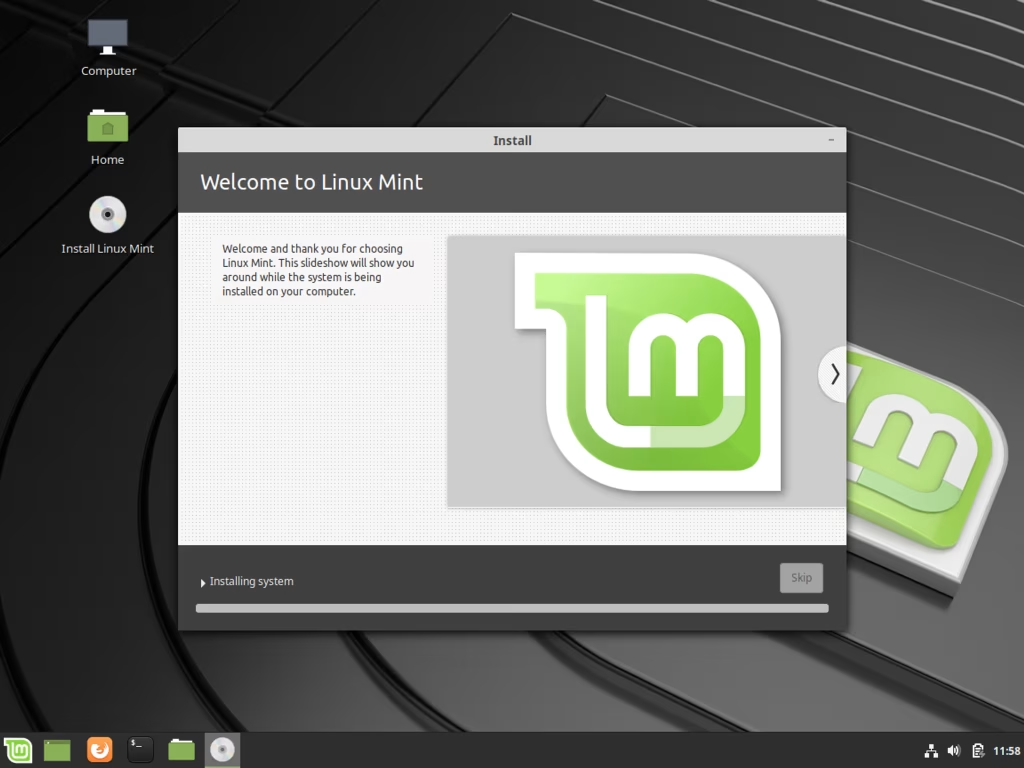
In early 2006, Clément Lefebvre ran a website hosting Linux reviews and tutorials. Listening to user complaints about how difficult Linux was to set up, he decided to patch the problems himself.
- The Kubuntu Experiment (2006): In August 2006, Linux Mint 1.0 “Ada” was released. It was built on Kubuntu 6.06 and used the KDE desktop environment. It lacked its own installation tools and was never released as a stable, final build.
- The Pivot to Ubuntu (2006): Realizing Ubuntu offered a better baseline, Lefebvre released Linux Mint 2.0 “Barbara” in November 2006, switching to a customized GNOME 2 desktop layout.
- The Out-of-the-Box Philosophy: At the time, major Linux distributions excluded proprietary media formats due to strict philosophical or legal stances. Mint defied this trend by bundling pre-installed media codecs, alongside wireless and graphics drivers. This immediately won over beginners.
- Building Custom Ecosystem Tools: Between versions 4.0 and 9.0, the project built its signature software tools:
- A specialized update program rating upgrades by safety and stability to prevent system breakages.
- A heavily customized, searchable system menu mimicking Windows.
- An early software store that made downloading applications trivial.
2. The GNOME 3 Crisis & Innovation (2011–2014)
By 2011, Linux Mint was incredibly popular, running a highly refined GNOME 2 desktop. That year, the upstream GNOME project completely redesigned their interface into GNOME 3, removing the traditional taskbar, application menus, and desktop icons.
- The Fallback Failure: Mint 12 attempted to use GNOME 3 with layout extensions, but the result was slow and unstable.
- The Birth of MATE and Cinnamon (2012): To save their user base, Mint took a multi-lane approach in Linux Mint 13:
- They officially support MATE, a project that preserved the old GNOME 2 interface.
- They launched Cinnamon, their own flagship desktop environment. Cinnamon utilized modern internal technologies but re-implemented a traditional layout with a bottom panel, system tray, and main menu.
- The Debian Safety Net: Concerned that Ubuntu might make future structural choices that could hurt Mint, the team developed Linux Mint Debian Edition . This bypassed Ubuntu entirely, tracking Debian directly to ensure Mint could survive if Ubuntu ever shut down.
3. Structural Re-engineering (2014–2019)
Up until 2014, the team released a brand-new operating system version every six months, matching Ubuntu’s quick release cycle. This constant rebuilding phase became unsustainable for a small developer team.
- The LTS-Only Strategy (2014): Starting with Linux Mint 17, the team announced they would only base major releases on Ubuntu Long-Term Support editions. Instead of a total overhaul every six months, they would ship three minor point releases over a two-year span, focusing entirely on desktop features and bug fixes.
- Trimming the Fat (2017–2019): To focus development energy, Mint dropped upstream flavors that required heavy maintenance. They discontinued the official KDE Plasma edition with Mint 18.3 and phased out older 32-bit hardware support after Mint 19.3.
4. Independence & Current State (2020–2026)
In recent years, Linux Mint has focused heavily on protecting user choice and software independence from corporate decisions made by Ubuntu’s parent company, Canonical.
- The Snap Packages Stand (2020): In Linux Mint 20, the operating system completely blocked Ubuntu’s Snap Store by default. The team argued that Canonical was forcing proprietary backend elements onto users. Mint chose to embrace Flatpak as its sandboxed application alternative instead.
- XApps Initiative: To keep core programs looking uniform across different interface options, Mint developed the XApps suite. These core tools (like text editors, media players, and image viewers) are engineered to look identical on any desktop environment.
- Modern Refinement: Linux Mint 22 (“Wilma”) and its subsequent iterations through Mint 22.3 (“Zena”) integrate modern audio frameworks and streamlined software management tools.
- Extended Development: Moving forward into Linux Mint 23 (“Alfa”), the project has intentionally adopted a longer development gap following upstream Ubuntu releases. This policy allows developers to carefully resolve bugs, test hardware compatibility, and flesh out modern features without being bound to a rushed schedule.