The History Of Raspberry Pi®
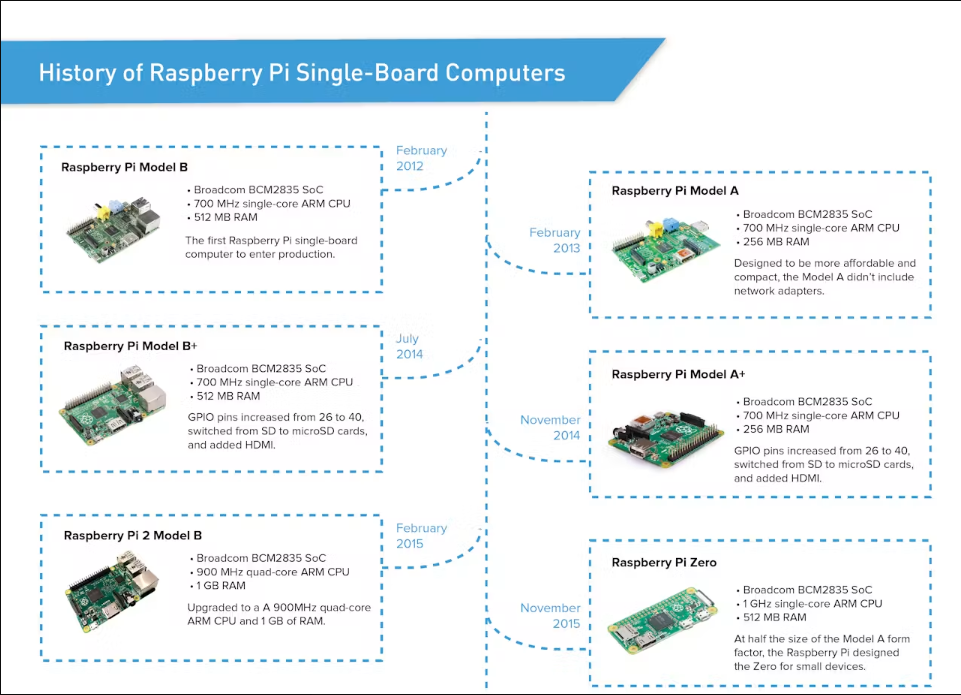
Conceived in 2006 by Eben Upton and the team at the University of Cambridge, the Raspberry Pi project launched publicly on February 29, 2012. Created to revive computer science education and tackle a decline in coding skills among applicants, the initial $35 Model B sold out its 10,000-unit run on the very first day.
The original 2012 Raspberry Pi featured a 700 MHz processor and 256 MB of RAM. Since then, the platform has seen several major iterations:
- 2012 (Model A & B): The Raspberry Pi launched as a fully functional, barebones computer board meant to boot directly into a Python console.
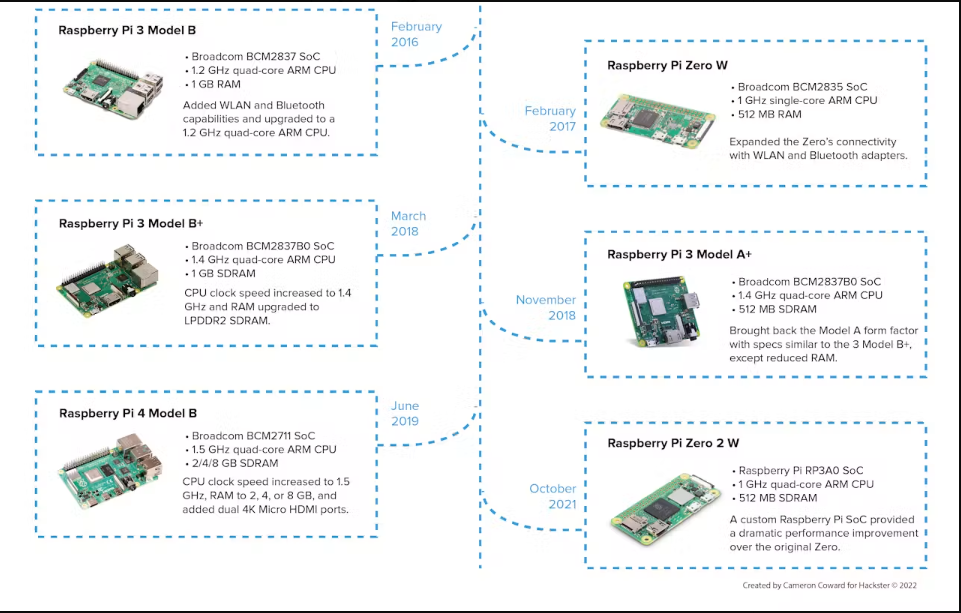
- 2016 (Raspberry Pi 3): Introduced built-in Wi-Fi and Bluetooth, officially making it a true all-in-one wireless node.
- 2019 (Raspberry Pi 4): Brought desktop-level speeds with multiple RAM variants (up to 8GB) and dual 4K display support.
- 2021 (Raspberry Pi Pico): Expanded the ecosystem beyond Linux computers into the microcontroller market.
- 2023 (Raspberry Pi 5): The latest flagship model featuring custom in-house silicon, significantly faster processing speeds, and a dedicated PCIe interface.
What began as a grassroots educational tool quickly became a global phenomenon. Today, the boards are used by hobbyists for home servers, retro gaming, and robotics, as well as by enterprise and industrial engineers for commercial applications. With tens of millions of units shipped worldwide, the Raspberry Pi Foundation reinvests its profits into educational programs and charitable projects globally.