
The History Of Arduino®
🌐 The Magic of Arduino: Why This Tiny Board Changed the World of Making
There was a time when building your own electronic gadgets required a degree in electrical engineering, a deep understanding of complex circuitry, and thousands of dollars in specialized equipment.
Then came Arduino , and everything changed. If you have ever wanted to build a smart device, automate a part of your home, or make a piece of art interact with human touch, Arduino is the bridge that turns those concepts into physical reality.
🧠 What exactly is Arduino?
At its core, Arduino is an open-source electronics platform based on flexible, easy-to-use hardware and software. It acts as the physical “brain” for your DIY projects.The platform consists of two main parts:
- The Hardware: A physical circuit board (microcontroller) that can read inputs—such as light on a sensor, a finger on a button, or a Twitter message—and turn it into an output, like activating a motor, turning on an LED, or publishing something online.
- The Software: A free, simplified programming environment (the Arduino IDE) that runs on your computer. You use it to write instructions and upload them to the board via a simple USB cable.
⭐ Why Arduino Became a Global Phenomenon
Arduino was created in 2005 by a group of teachers in Ivrea, Italy. They wanted a cheap, easy tool for design students to build interactive projects. They made it open-source, meaning anyone could copy the design or manufacture their own versions.This decision sparked a global revolution for several key reasons:
1. Incredible Simplicity
Traditional microcontroller programming is notoriously difficult. Arduino simplified the code into a user-friendly version of C/C++. Complex chip configurations are handled behind the scenes, allowing you to control hardware with just a few lines of plain-English text.
2. Low Cost
An official Arduino board is highly affordable, and because the designs are open-source, third-party compatible boards are available for the price of a cup of coffee. It democratized electronics, making it accessible to students and hobbyists worldwide.
3. A Massive Global Community
Because millions of people use Arduino, it has one of the largest tech ecosystems on the internet. If you want to connect a specific sensor, build a drone, or control a screen, someone has already written the code, filmed a video tutorial, and share it for free.
🛠️ The Hardware Ecosystem
While the Arduino UNO is the classic flagship board most people start with, the ecosystem has expanded to fit almost any need:
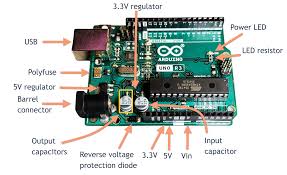
- Arduino Nano: A miniature version of the UNO, perfect for shrinking projects down to fit into small enclosures or wearable gear.
- Arduino Mega: A powerhouse board with dozens of extra connection points, designed for massive projects like 3D printers or complex robotics.
- Modern Boards (IoT): Newer generations feature built-in Wi-Fi and Bluetooth, allowing creators to build smart-home devices that communicate directly with smartphones and cloud servers.
🚀 The Gateway to Innovation
Arduino fundamentally shifted the boundary between consumer and creator. It proved that you do not need a factory or a corporate budget to invent something functional. Today, it is used by artists for interactive exhibits, by farmers for automated irrigation, by educators to teach STEM, and by entrepreneurs prototyping the next big tech product.It strips away the intimidating math and physics of traditional engineering, leaving you with pure, frictionless creativity.
| Year | Event / Milestone | Significance |
|---|---|---|
| 2001 | Interaction Design Institute Ivrea (IDII) opens in Italy. | The birthplace of the Arduino project, aiming to teach artists electronics. |
| 2003 | Hernando Barragán creates Wiring . | The foundational master’s thesis project that combined simplified code and a circuit |
| 2005 | IDII faces shutdown; the Arduino project is officially launched. | Massimo Banzi and co-founders fork Wiring, make it completely open-source, and name |
| 2006 | Introduction of the first widely distributed boards (like the Serial/USB Arduino). | The platform spreads outside of Italy to global universities and early hobbyists. |
| 2010 | Release of the flagship Arduino UNO . | Becomes the undisputed global standard board for beginners and educators. |
| 2015 | A bitter legal battle breaks out over the “Arduino” trademark. | The founders split into two competing factions (Arduino LLC vs. Arduino Srl), |
| 2016 | The founders settle their lawsuit and announce a reunion. | The two factions merge back into one unified company, stabilizing the ecosystem. |
| 2023 | Release of the Arduino UNO R4 . | A massive hardware upgrade, switching from an old 8-bit chip to a powerful 32-bit ARM processor. |
Arduino Hardware Evolution Table
| Year / Board | Microcontroller | Key Innovations & Upgrades |
|---|---|---|
| 2005: Serial | ATmega8 | The very first official board; required RS-232 serial interface and separate FTDI cables. |
| 2005: USB | ATmega8 | Introduced native USB connectivity for programming. |
| 2007: Diecimila | ATmega168 | Added auto-reset mechanism, making it much easier to upload code. |
| 2009: Duemilanove | ATmega328 | Doubled available memory (to 32KB) and automatically switched between USB and DC power. |
| 2009: LilyPad | ATmega168 | First wearable board designed with SparkFun, featuring washable pads. |
| 2010: UNO R1/R2/R3 | ATmega328P | The quintessential maker board. Standardized the classic I/O shield footprint and later moved to native USB chips (ATmega16U2) on the R3. |
| 2010: Mega 2560 | ATmega2560 | Built for complex projects with 54 I/O pins and a massive increase in memory. |
| 2012: Leonardo | ATmega32U4 | Enabled native USB support; the board could act as a mouse or keyboard directly. |
| 2012: Due | AT91SAM3X8E | Arduino’s first 32-bit ARM Cortex-M3 processor, marking a massive leap in processing power. |
| 2015: Zero | ATSAMD21G18 | Introduced 32-bit performance to standard form factors and incorporated onboard debugger (EDBG). |
| 2015: Mega ADK | ATmega2560 | Developed for Android Accessory Development. |
| 2019: Portenta H7 | STM32H747 | Industrial-grade dual-core, high-speed controller with built-in Wi-Fi and Bluetooth. |
| 2021: UNO R3 / Portenta | Various | Arduino updated the IDE to IDE 2.0 and expanded its IoT Cloud infrastructure. |
| 2023: UNO R4 (Minima / WiFi) | Renesas RA4M1 | Massive processing upgrade to 32-bit ARM Cortex-M4; added CAN bus, HID support, and an LED matrix on the WiFi version. |

David Cuartielles (Left),
Gianluca Martino (Left-middle),
Tom Igoe (Middle),
David Mellis (Right-middle),
and Massimo Banzi (Right)